Narvik in 1940 and the war museum
For two months in spring 1940, German, Norwegian, British, French and Polish forces fought over Narvik and its ore harbour. The war museum in the town centre tells the story, and traces of the fighting remain in the mountains.
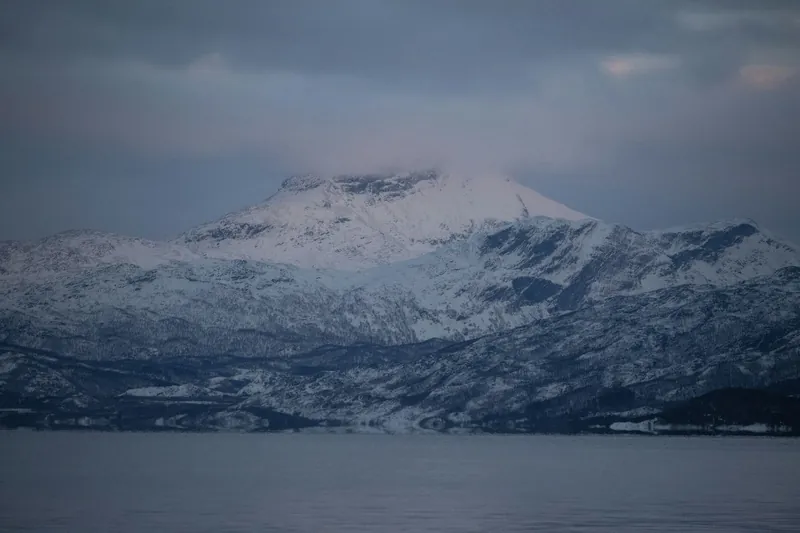
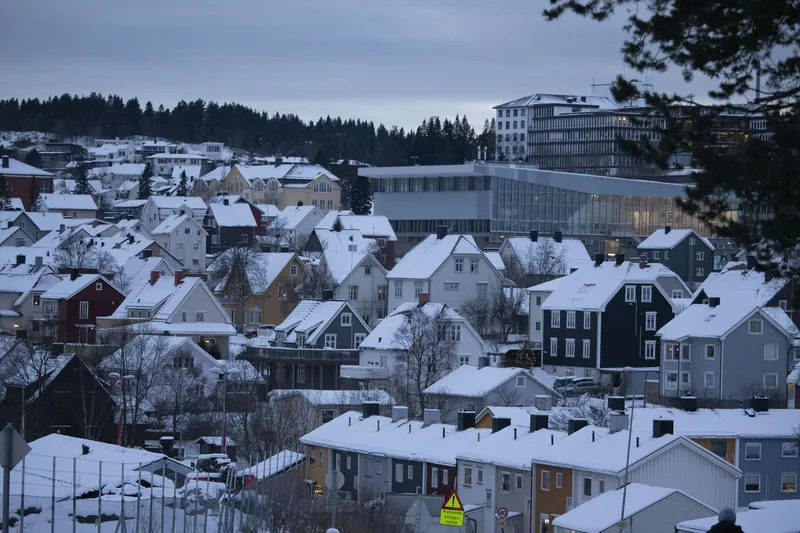
Narvik grew up as a port for Swedish iron ore. The railway from the mines at Kiruna reached the town in 1902, and its harbour stays open in winter, when the Swedish ports on the Gulf of Bothnia freeze. In the spring of 1940 that harbour made Narvik a target, and the town and its fjords saw weeks of fighting at sea and in the mountains. The town was badly damaged, and rebuilding was not finished until 1950.
This page follows the Norwegian encyclopaedia Store norske leksikon for the dates. Figures for losses differ between sources, and we give them as the encyclopaedia does.
April 1940, the battles in the fjord
Germany invaded Norway and Denmark on 9 April 1940, and German troops took Narvik the same day. Two Norwegian coastal defence ships, Eidsvold and Norge, lay ready to fight outside the harbour and were sunk. Store norske leksikon gives 276 dead and 96 survivors, noting that the numbers vary from source to source.
On 10 April five British destroyers attacked the German ships in the harbour, and each side lost two destroyers. Three days later, on 13 April, a second British attack came up the Ofotfjord. After six hours every German destroyer had been sunk, and the British lost no ships. The wrecks of both battles went down in the fjord and off the harbour.
The mountains and the retaking of Narvik
The war then moved onto land. Norwegian troops under General Carl Gustav Fleischer fought at Gratangen on 12 April and again from 24 April, and at Jordbrua on 13 April. British troops landed at Harstad and Sjøvegan on 14 April. French and Polish units arrived between 28 April and 9 May under the French general Béthouart.
At midnight before 28 May, Allied and Norwegian forces opened the attack on Narvik itself, and Norwegian soldiers entered the town that afternoon. The success was short. The Allies had been ordered on 24 May to withdraw, began the evacuation on 4 June and had gone by 8 June. On 10 June the Norwegian forces in Northern Norway capitulated. Store norske leksikon counts 62 days of fighting. The war museum also covers the German occupation that followed.
Narvik War Museum
The museum stands at Kongens gate 39 in the town centre and opens every day from 10:00 to 16:00, all year. Groups can visit by arrangement. A guided tour is not included in the ticket and has to be arranged in advance, according to Norway's Best at least one day before. Hours can change for events, so check the museum's own visitor page before you go.
The museum began as the war memorial museum of Nordland Red Cross. Since 2014 it has been run by the Narvik War and Peace Centre (Narviksenteret), a foundation set up in 2008 that researches war and conflict and is one of seven Norwegian peace and human rights centres. The exhibition covers about 2,500 square metres, with original uniforms, weapons and equipment on the battle for Narvik and on Northern Norway during the war.
Plan about one and a half to two hours. The texts are in Norwegian and English, a QR code gives translations into French, German, Polish and North Sámi, and reviewers mention that the station is about ten minutes' walk away. One visitor had trouble getting the QR ticket to work at the entrance, so keep the booking confirmation to hand.
The German war cemetery
The German war cemetery is part of the municipal cemetery on the slope above the Rombakfjord, beside the ore railway coming from Sweden. According to the German war graves commission, 1,474 German soldiers are buried there. The cemetery was laid out in 1940 and dedicated on 25 August 1960, and the commission's Schleswig-Holstein branch is its sponsor.
The same railway carries the Arctic Train, a return trip from Narvik station up to Bjørnfjell, the last stop before the Swedish border. The line climbs above the Rombakfjord, and the ticket includes an audio guide. More about the trip is on our Ofoten Line page.
A protected battle landscape
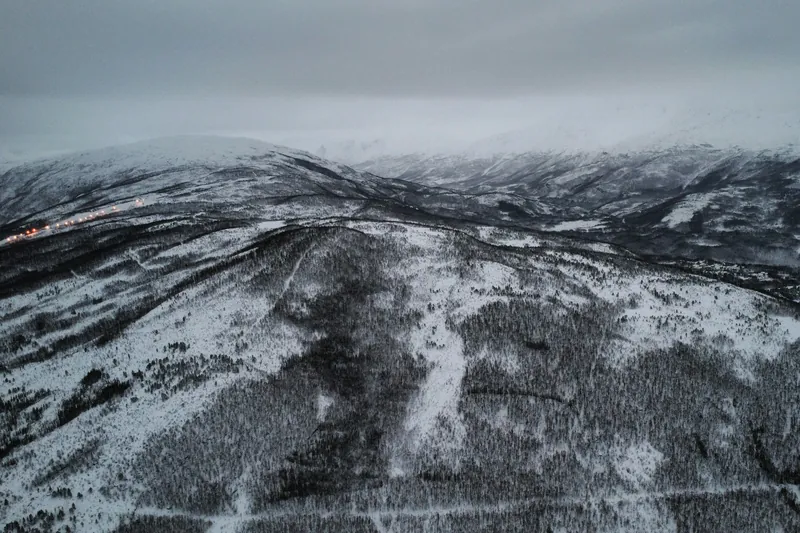
Many traces of the land fighting are still in the mountains. In June 2020 the Norwegian Directorate for Cultural Heritage protected about 27 square kilometres of the Narvik mountains as a war landscape. It contains many simple stone defensive and firing positions, and loose relics such as ammunition and shell fragments still lie on the ground.
Inside the protected area you may not move, change, dig up or take anything left from the fighting of 1940, and metal detectors are banned. Ordinary hiking, hunting and fishing are allowed. Leave anything you find where it lies; old ammunition can still be dangerous. For the town around the museum and the ore harbour today, see our Narvik town page, and for routes that combine the museum with other sights, the itineraries.
All tours side by side
An entry ticket for the war museum and a return trip on the ore railway, the line that made Narvik a target in 1940.
| Tour | Format | Duration | Age | Rating | From |
|---|---|---|---|---|---|
| Ofoten Line return trip to BjørnfjellThe Arctic Train ASA return train ride from Narvik station up the iron ore line to Bjørnfjell, the last stop before the Swedish border, with an audio guide on the way. | Train, returnReturn ticket, audio guide, Wi-Fi | 2.5 hoursNarvik railway station | – | 4.5 (448 reviews) | From €66Free cancellationBook on GetYourGuide |
| Ticket for the Narvik War MuseumNarvik War MuseumThe museum in the town centre covers the 62 days of fighting around Narvik in 1940 and the occupation that followed, with objects and interactive displays. | Entry ticketEntry during opening hours | Allow 1.5–2 hoursAt the museum | All ages | 4.5 (35 reviews) | From €14Free cancellationBook on GetYourGuide |
Prices and ratings come from the booking platform and are shown in euros per person. If you book through these links we earn a commission. Your price stays the same. Sorted by number of reviews.
Questions travellers ask
Why was Narvik fought over in 1940?
Narvik ships iron ore from the Swedish mines at Kiruna, and its harbour stays free of ice in winter, when the Swedish ports on the Gulf of Bothnia freeze. That made the town important to both sides at the start of the war in Norway.
When is the Narvik War Museum open?
The museum gives its hours as 10:00 to 16:00 every day. Groups visit by arrangement, and a guided tour costs extra and has to be booked in advance.
How long should I plan for the museum?
About one and a half to two hours. The museum is in the town centre, and reviewers mention a walk of about ten minutes from the railway station. English texts are available.
When did the Allies leave Narvik?
In early June 1940. According to Store norske leksikon the evacuation began on 4 June and the last Allied forces had left on 8 June. Norwegian forces in Northern Norway capitulated on 10 June.
Can I take objects from the battlefields?
No. In the protected war landscape in the Narvik mountains it is forbidden to move, alter, dig up or take any item from the fighting of 1940, and metal detectors are not allowed. Hiking, hunting and fishing are permitted.
Where these facts come from
Dates, opening hours and rules change. We checked these pages in October 2026; the official source has the final word.
- Narvik War Museum: Opening hours and practical information
- Narvik War Museum: Guiding and group visits
- Norway's Best: Narvik Krigsmuseum (Norwegian)
- Store norske leksikon: Slaget om Narvik
- Store norske leksikon: Narviksenteret
- Encyclopaedia Britannica: Narvik
- Lex: Narvik
- Volksbund: Narvik war cemetery
- Riksantikvaren: Krigshistorisk landskap i Narvikfjellene (PDF)
- Tour pages on GetYourGuide, checked 23 October 2026